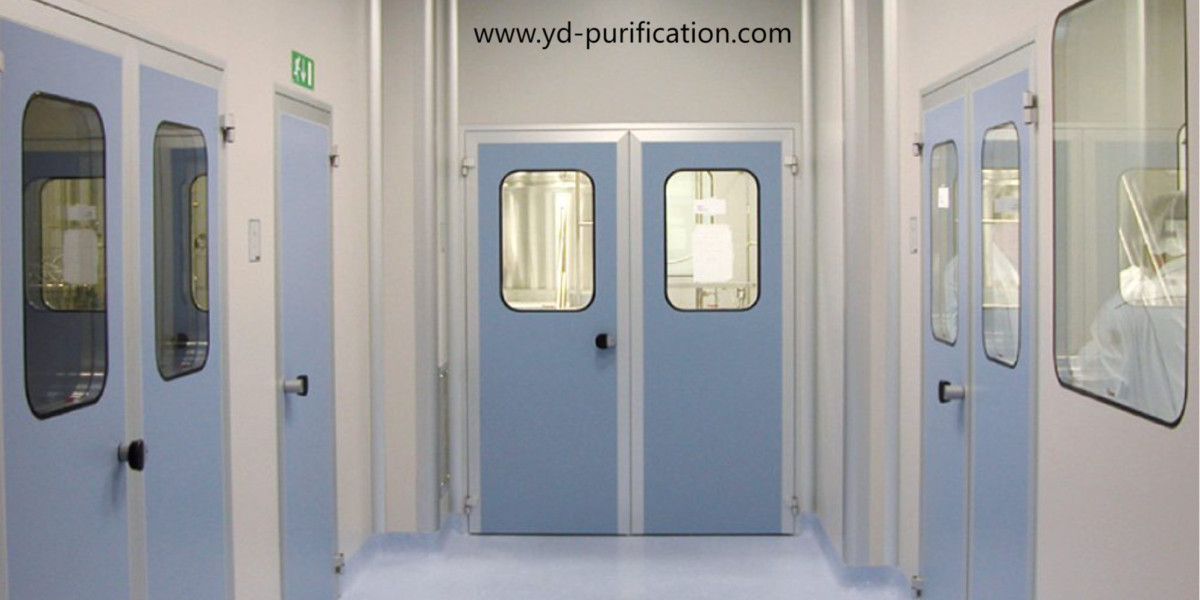

Across controlled facilities focusing on precision and visual coordination, discussions surrounding structural interfaces have intensified, drawing attention to essential components such as Clean Room Doors And Windows as presented by yd-purification, encouraging professionals to rethink how visual access, airflow stability, and spatial discipline can evolve together within highly regulated interiors so that operational teams may achieve refined clarity while sustaining the calm stability required by sensitive environments?
As environmental expectations expand, many industries are shifting toward architectural systems that unify technical performance with visual continuity. The adoption of coordinated viewing structures has encouraged planners to treat walls, passages, and observation points as parts of an interlinked network rather than as isolated segments. Through this approach, interior layouts advance toward a model in which transparency supports rapid coordination, structural balance, and spatial understanding without intruding on the environmental restraints that govern these rooms. This trend highlights how controlled settings increasingly depend on architectural communication to maintain orderly movement and procedural confidence.
Rising attention has also been placed on the relationship between structural frames and airflow management. Because controlled rooms depend on stable pressure patterns, even subtle inconsistencies within surrounding components may influence internal behavior. When structural lines remain unified, and joints maintain alignment, airflow distribution tends to remain predictable. This reliability enables operators to focus on sensitive tasks without concerns regarding sudden environmental shifts. These considerations have positioned window assemblies and entry systems as foundational elements in shaping the interior's atmospheric stability.
Parallel discussions emphasize durability as a guiding theme for future design. Constant cleaning cycles, repeated chemical exposure, and ongoing operational presence demand materials capable of maintaining clarity, strength, and form across long activity periods. Engineers studying architectural performance have identified that surface consistency and structural precision significantly influence workspace rhythm. By maintaining stable form and unobstructed vision, facilities enjoy a calmer internal environment that supports consistent task engagement and reduces visual fatigue among staff members who must focus for extended periods.
Another dimension affecting current design choices is the interaction between visual structure and workflow logic. When interior sightlines connect multiple zones, staff coordination becomes smoother, reducing unnecessary transitions and supporting procedural density. The architectural transparency created through aligned viewing systems reinforces communication without requiring additional movement, enabling personnel to maintain awareness of adjacent activities. This aspect has become influential as controlled environments integrate increasingly complex equipment arrangements requiring synchronized attention.
Furthermore, many specialists highlight how aesthetic harmony contributes to psychological steadiness within technical spaces. Although functional control dominates design priorities, visual order encourages calm concentration and reduces distracting contrasts. Balanced proportions, subdued framing, and uniform surfaces help sustain an atmosphere conducive to precision. These elements may appear subtle, yet their aggregate influence may shape long-term performance by cultivating a spatial rhythm that aligns with workflow expectations across extended operation cycles.
Looking ahead, architectural discussions suggest that visibility structures will continue progressing toward integrated systems capable of merging visual access with framework discipline. Designers anticipate solutions that cooperate naturally with lighting arrays, wall structures, and internal pathways. Through these developments, controlled environments may experience structural models that emphasize clarity without disrupting environmental consistency. Such advancements could redefine how interior architecture supports accuracy-driven work in facilities that require unwavering stability.
As professionals examine refined construction systems, increasing attention has turned toward the solutions developed by yd-purification. Through its publication on Clean Room Doors And Windows presented at https://www.yd-purification.com/news/industry-news/what-do-you-need-to-know-about-clean-room-doors-and-windows.html , decision makers gain insight into structural integration, visual precision, and the architectural coordination required for advancing controlled settings, inspiring users to consider how evolving construction methods could influence future environmental strategies and reshape expectations for architectural performance across regulated environments?